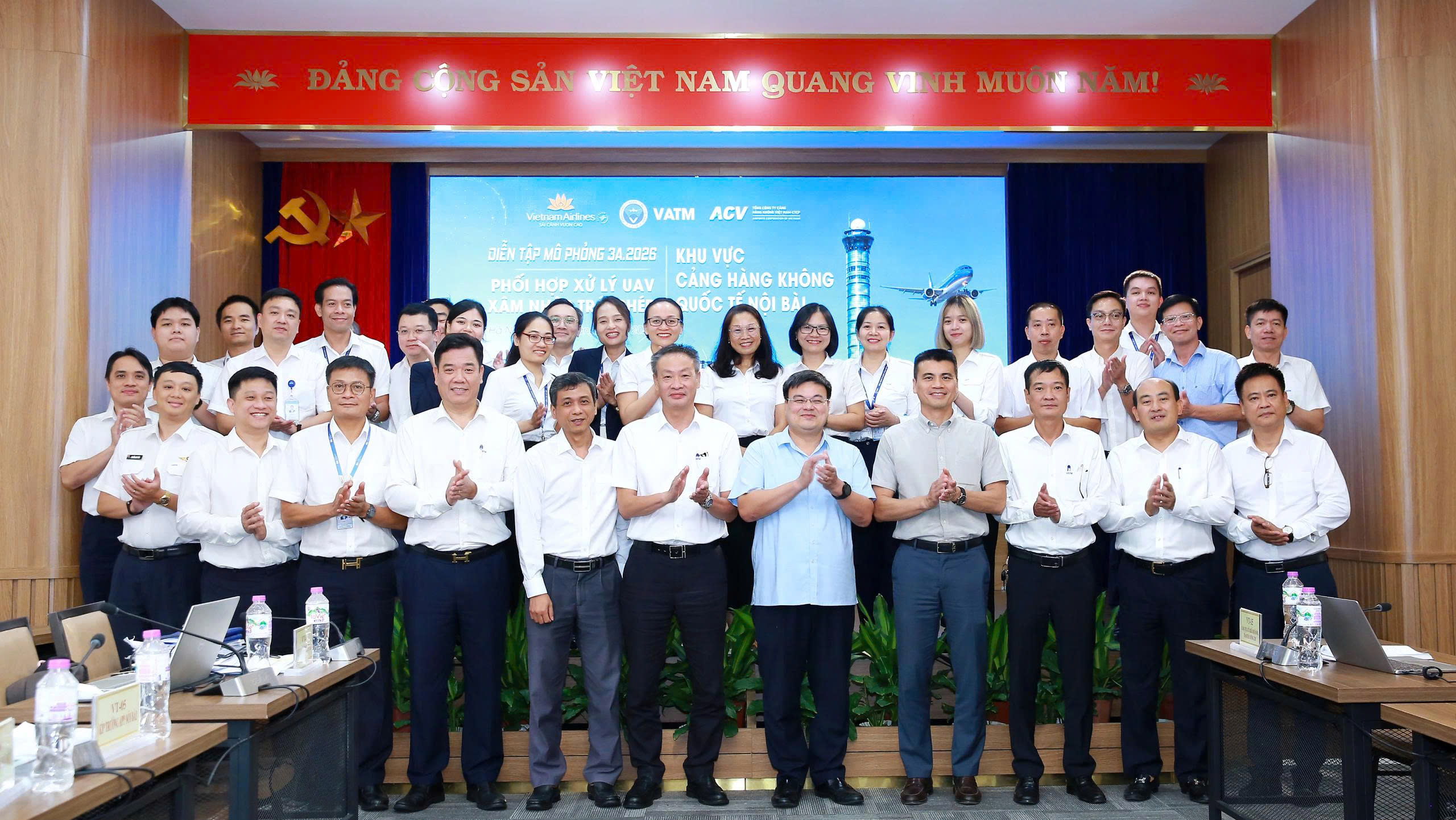
On August 25, 2026, the Vietnam Air Traffic Management Corporation (VATM), the Airports Corporation of Vietnam (ACV), and Vietnam Airlines Corporation coordinated to organize a simulation drill for a scenario in which a drone intrudes into a no-fly zone, threatening flight safety at Noi Bai International Airport.
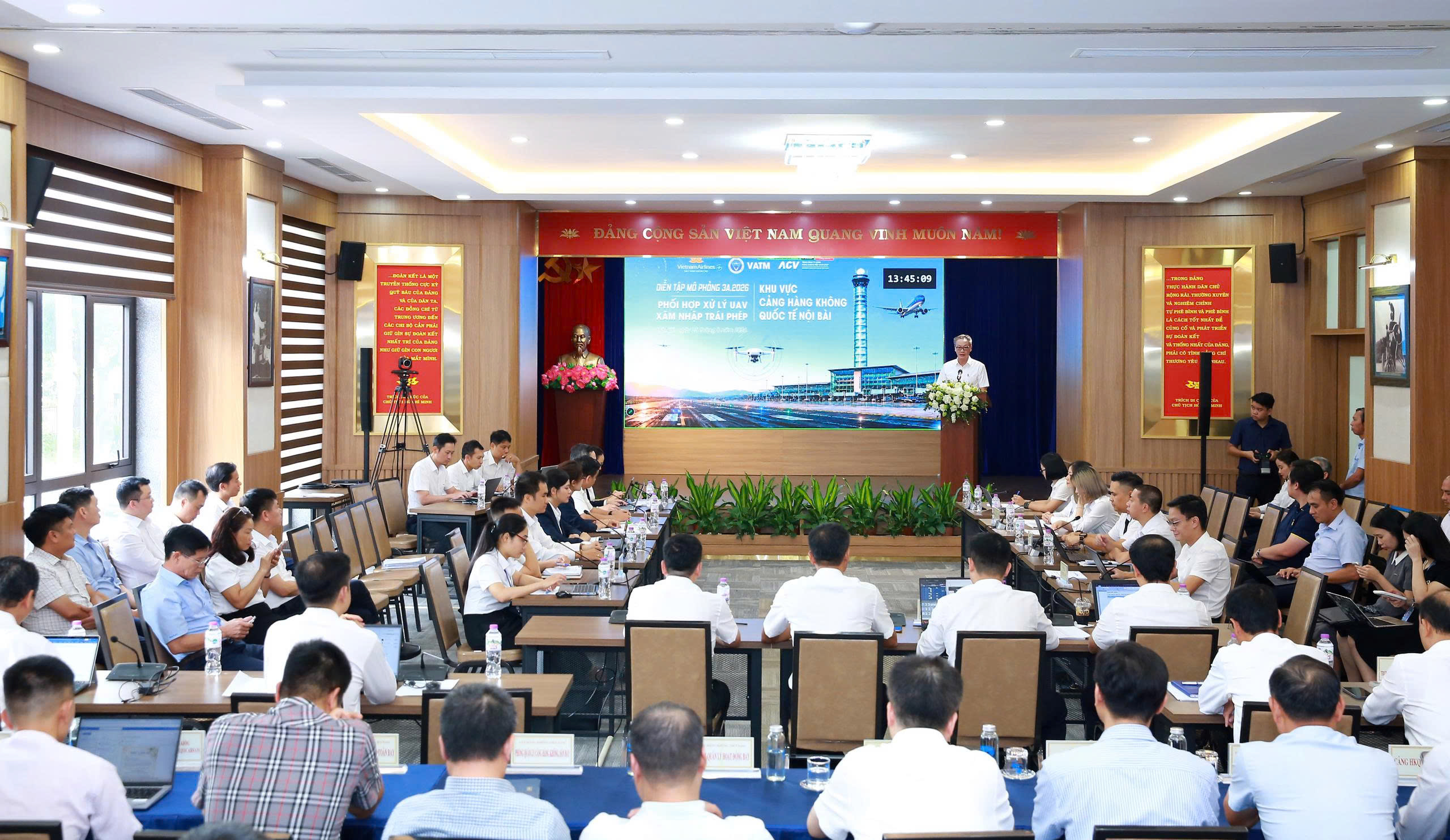
The drill, codenamed 3A.2026, clearly demonstrated the three pillars that maintain a direct and continuous relationship within the aviation operations chain: flight operations management – airport – airline. The purpose of the program was to test the parties' capacity for coordination, cooperation, information sharing, and decision-making, as well as to review their ability to resume operations in the event of an unusual situation.
The main drill took place from 14:00 to 17:05 in simulation format, using video and simulated flight data. To genuinely test response capability, the specific scenario was not announced in advance. The scenario involved an unmanned aerial vehicle appearing illegally during peak hours, causing a chain of impacts on approach airspace, the airside area, parking positions, the terminal, ground services, flight crews, and passengers.
All drill data was kept separate from the actual operating systems and did not affect normal operations at Noi Bai International Airport. The focus of 3A.2026 was to test the entire coordination chain, from information verification to operational coordination.
According to the scenario, VATM carried out early and remote air traffic flow regulation; ACV managed the airport, airside area, apron, and terminal; and Vietnam Airlines adjusted its fleet plan, flight crews, and passenger services.
The coordination also focused on assessing the conditions for gradually resuming operations in accordance with each unit's proper functions and authority. The results drawn from 3A.2026 will serve as a basis for the three organizations to refine their response plans and their regular coordination mechanism. Through this drill, VATM, ACV, and Vietnam Airlines once again affirmed that safety is always the top priority, aiming to maintain continuous, efficient aviation operations while minimizing impact on passengers as much as possible.