
 22°C
|
°F
HA NOI
22°C
|
°F

To this day, Duong Lam still retains the defining features of a Northern Vietnamese village, from its houses and village gates to the familiar “banyan tree, waterside landing and communal house courtyard,” as well as pagodas, shrines and watch huts. It also preserves long-established customs and traditions, along with dishes deeply rooted in local culture. In recent years, Duong Lam Ancient Village has been an intriguing stop on journeys to discover the cultural heritage of the Xu Doai region. Visitors to Duong Lam Ancient Village can explore its old houses and enjoy the peaceful, tranquil village scenery, leaving behind the fatigue and bustle of city life.
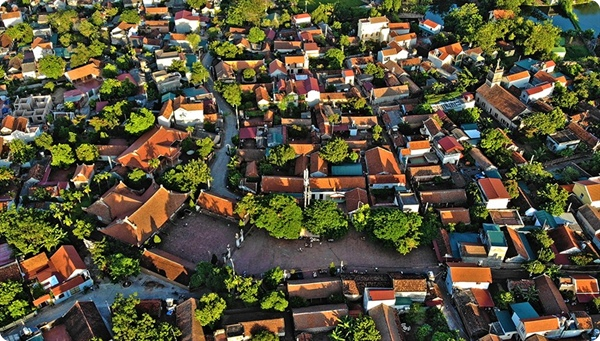
Today, Duong Lam is the collective name for a heritage complex encompassing the population and land area of five hamlets (Mong Phu, Cam Thinh, Dong Sang, Doai Giap and Cam Lam), with nearly 1,500 households and more than 6,000 residents. The Duong Lam Ancient Village heritage complex took shape and developed in close connection with the daily lives of local rural residents. It represents the achievements of human ingenuity, creativity and selective cultural exchange, and, above all, the preservation of the essence and identity of the Vietnamese nation. These qualities are reflected in laterite architectural works weathered by time, traditional festivals, history and the everyday lives of local people.
Just 40 km west of central Hanoi, the village is set in a location of exceptional geomantic appeal, “backed by mountains and facing water,” with Tan Mountain behind it and the Red River before it. Duong Lam Ancient Village is considered a treasure trove of the tangible and intangible cultural heritage of this ancient land, the heart of the Xu Doai cultural region.
In 2005, Duong Lam was recognized by the Ministry of Culture and Information (now the Ministry of Culture, Sports and Tourism) as a national-level architectural and artistic heritage site.
In recent years, tourism development in Duong Lam Ancient Village has achieved positive results, thanks to efforts to promote and widely publicize the site’s value through mass media and the internet.
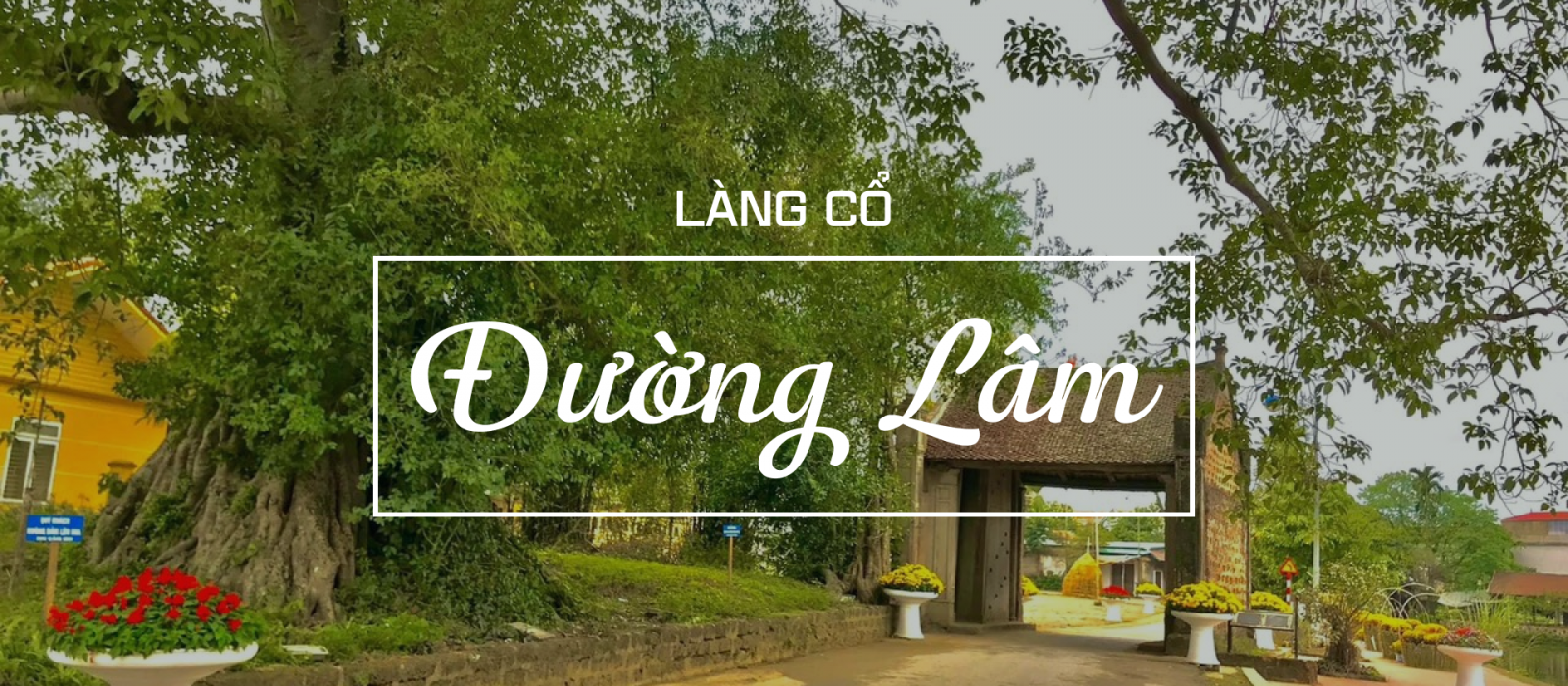
From 2014 to 2019, approximately 700,000 tourists, including more than 30,000 international visitors, came to explore and experience Duong Lam Ancient Village, generating more than 7.5 billion in admission fees for the local area. Tourism development in Duong Lam Ancient Village has also created jobs and income for local residents, contributed to the area’s socioeconomic development, and widely promoted the image of this land, which is rich in valuable historical and cultural heritage. Recognition as a city-level tourist site will help ensure that the management and development of Duong Lam Ancient Village are more sustainable and effective.
Speaking at the ceremony, Ngo Van Quy, Vice Chairman of the Hanoi People’s Committee, affirmed that Duong Lam is a quintessential ancient Vietnamese village, representative of the flourishing civilization of the Red River Delta. Few places have such a wealth of historical traces as Duong Lam. This land is a gathering place for a rich array of tangible and intangible cultural heritage. These include famous historical sites such as Phung Hung Temple, the temple and mausoleum of Ngo Quyen, Doai Giap Communal House, Mong Phu Communal House, Cam Thinh Communal House, Mia Pagoda, the Memorial Hall of Giang Van Minh, Mong Phu Village Gate and hundreds of valuable old houses.
Ngo Van Quy also called on the authorities of Son Tay Town and Duong Lam Commune to selectively preserve and promote the outstanding traditional cultural values of the heritage site and tourist destination of Duong Lam Ancient Village; create a safe, welcoming and hospitable tourism environment; and promptly complete the dossier proposing adjustments to the plans for Duong Lam Ancient Village and Son Tay Town as a whole, to attract investment in tourism and service infrastructure and establish Duong Lam Ancient Village as a leading tourist destination in the capital and across the country.
The official also urged Son Tay Town to carry out a number of tasks in the coming period to strengthen the preservation, investment in and development of this tourist site. These include stepping up communication and education on the value of historical and cultural heritage, as well as the city’s and town’s tourism and service development programs and plans, so that officials, Party members and residents share a common understanding, support these efforts and take part in their implementation.
The outstanding traditional cultural values of the heritage site and tourist destination of Duong Lam Ancient Village in particular, and Son Tay Town in general, should be selectively preserved and promoted. Particular importance should be given to safeguarding the area’s distinctive and unique features while eliminating outdated elements that are no longer appropriate today.
Continue to focus on developing Duong Lam Ancient Village as a destination that meets national standards, while creating a safe, welcoming and hospitable tourism environment and actively protecting the natural environment and landscapes at tourist sites. Finally, the Town People’s Committee should direct the completion of the dossier proposing adjustments to the plans for Duong Lam Ancient Village and Son Tay Town as a whole, with a view to reviewing and managing land resources to attract investment in tourism and service infrastructure.
As part of the program to receive the decision and announce Duong Lam as a tourist site, several activities will also take place from 22 – 23.11: a seminar on solutions for developing tourism in Duong Lam Ancient Village; an exhibition of traditional Duong Lam clothing; a presentation of culinary products from the Ancient Village; and a festival featuring traditional folk games.