 22°C
|
°F
HA NOI
22°C
|
°F

Content is being updated.

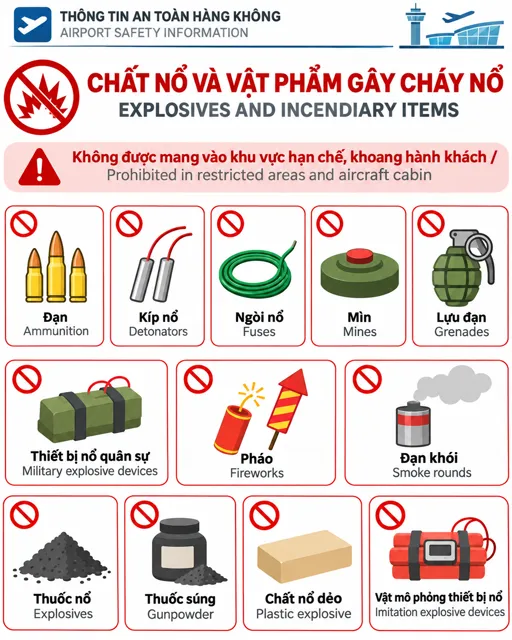
Ammunition, detonators, fuses, slow-burning fuses, mines, grenades, all types of fireworks, explosive materials, gunpowder, plastic explosives, simulators of explosive devices.
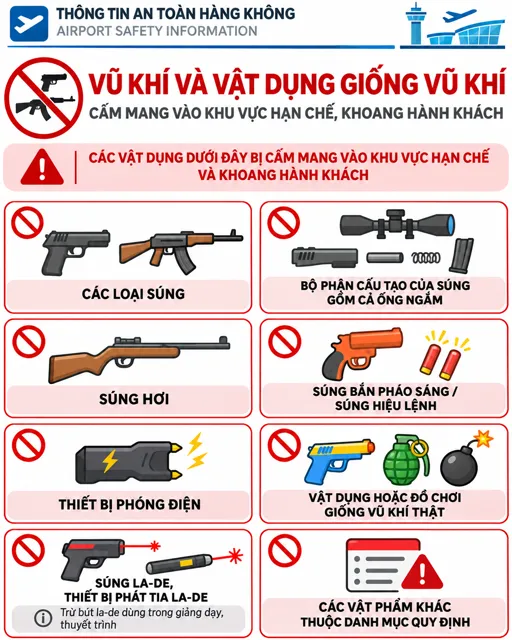
• Types of firearms (handguns, rifles, submachine guns, shotgun, hunting guns, and other types of firearms), firearm components, including scopes; air guns, flare guns. • Electric discharge devices and types of self-made electric discharge devices. • Items, toys resembling real weapons such as guns, bombs, mines, grenades, ammunition, torpedoes, naval mines, shell casings, items made from shell casings. • Laser guns, laser emitting devices, except for laser pointers used in teaching and presentations. • Flare guns and signal guns.
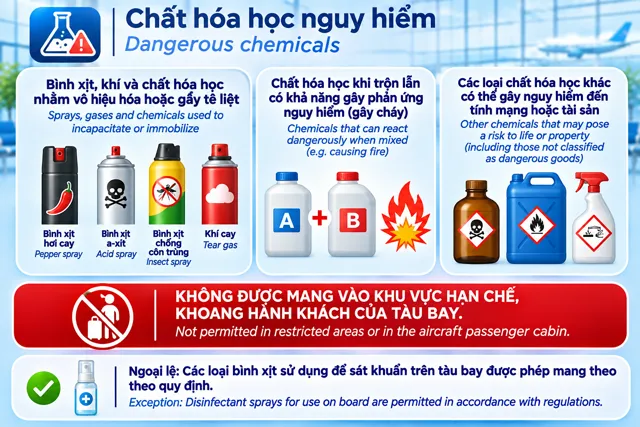
Pepper spray, aerosol spray, insect repellent spray, chemicals that may cause dangerous reactions and other hazardous chemicals. There is an exception for disinfectant sprays used on aircraft as per regulations.
• Axe, milling cutter, razor blade, utility knife. • Knife with a blade longer than 6 cm or a total length of the handle and blade over 10 cm. • Scissors with a blade longer than 6 cm measured from the pivot point between the two blades or a total length of the handle and blade over 10 cm. • Martial arts tools with a pointed end or sharp edge. • Camera tripod, camera, stick, umbrella handle with a pointed metal tip. • Other sharp objects that can be used as offensive weapons, with a total length over 10 cm.
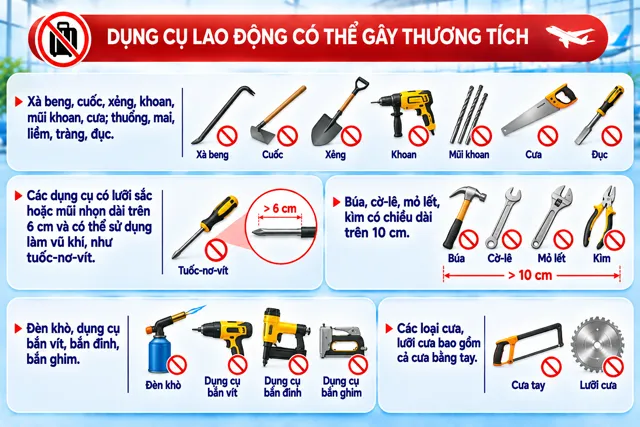
Drills, drill bits, saws, blow torches, screwdrivers, nail guns, staplers; tools with sharp blades or pointed tips longer than 6 cm that can be used as weapons; hammers, wrenches, pliers longer than 10 cm and other tools listed in the Category.
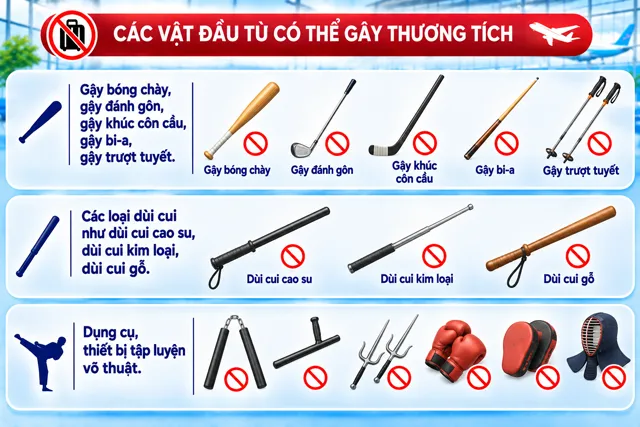
Baseball bats, golf clubs, hockey sticks, billiard cues, ski poles, batons, martial arts training tools and equipment.
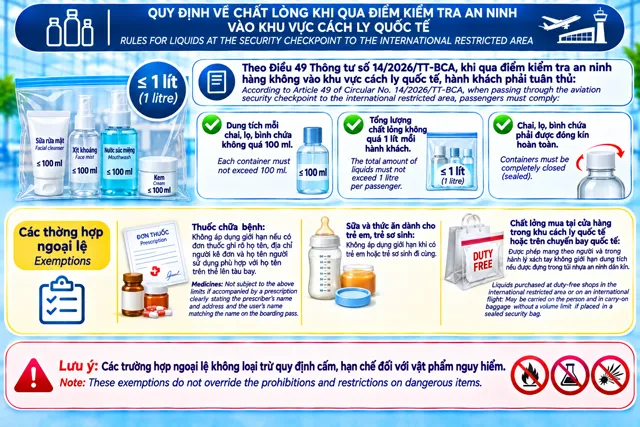
According to Article 49 of Circular No. 14/2026/TT-BCA, when passing through the aviation security checkpoint into the international restricted area, passengers must comply with: • The capacity of each bottle, jar, or container must not exceed 100 ml. • The total amount of liquid must not exceed 1 liter per passenger. • Bottles, jars, or containers must be completely sealed. Exceptions Medication: The above limits do not apply if there is a prescription clearly stating the full name, address of the prescriber, and the full name of the medication user matching the name on the boarding pass. Milk and food for children and infants: The limits do not apply when traveling with children or infants. Liquids purchased at shops in the international restricted area or on international flights: Allowed to be carried on the person and in hand luggage without volume limits if contained in a sealed security bag. Note: Exceptions do not exclude regulations prohibiting or restricting dangerous items.
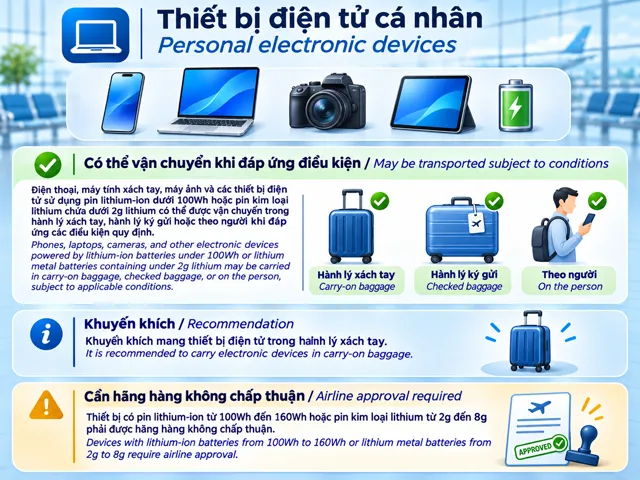
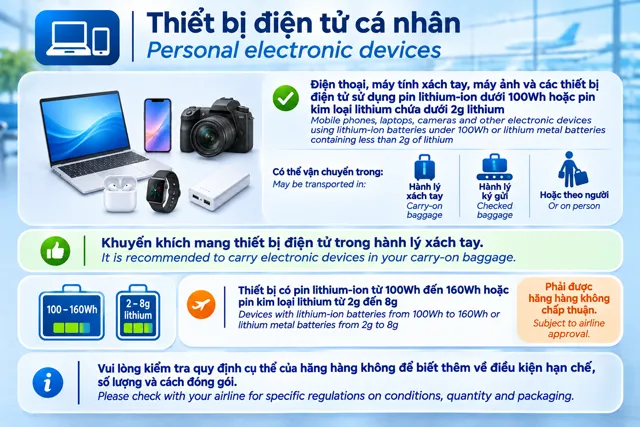
Mobile phones, laptops, cameras, and electronic devices using lithium-ion batteries under 100Wh or lithium metal batteries containing less than 2g of lithium may be transported in carry-on luggage, checked baggage, or on the person when meeting the specified conditions. It is encouraged to carry electronic devices in carry-on luggage. Devices with lithium-ion batteries from 100Wh to 160Wh or lithium metal batteries from 2g to 8g must be approved by the airline.
• Not allowed in checked baggage. • Only permitted in carry-on baggage or on the person under applicable conditions. • Must be protected against short circuits. For lithium-ion spare batteries from 100 Wh to 160 Wh: • Maximum of 02 batteries per passenger. • Must be approved by the airline. • Must meet short circuit protection requirements. Passengers need to check the capacity and transportation requirements of spare batteries with the airline before the flight.
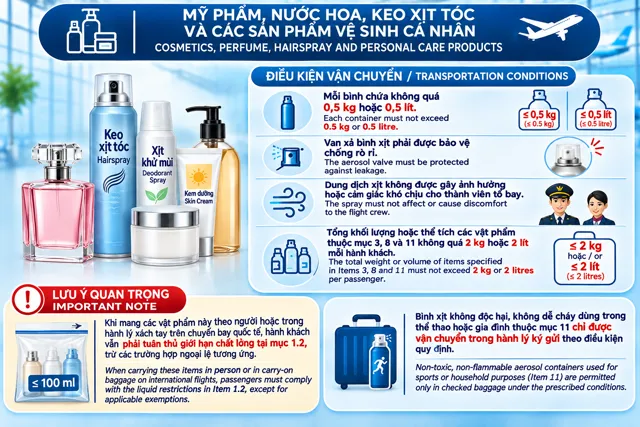
According to Section III, item 8 of the list of restricted dangerous items that may be carried by passengers in their luggage on board the aircraft issued together with Official Letter No. 25655/QLXNC-TTANHKQG dated September 21, 2026 (implemented in Official Letter No. 3173/QLXNC-NB dated October 1, 2026), items such as perfume, hair spray, cosmetics, personal hygiene products (including spray cans) may be transported when meeting the following conditions: - Each container must not exceed 0.5 kg or 0.5 liters; - Spray cans with release valves must be protected by a cap or appropriate measures to prevent leakage; - The spray solution must be of a type that does not affect or cause discomfort to crew members while performing their duties; - The total weight or volume of items under items 3, 8, and 11 of Section III must not exceed 2 kg or 2 liters per passenger. For non-toxic, non-flammable spray cans used in sports or household according to item 11 of Section III, items may only be transported in checked luggage under the specified conditions.
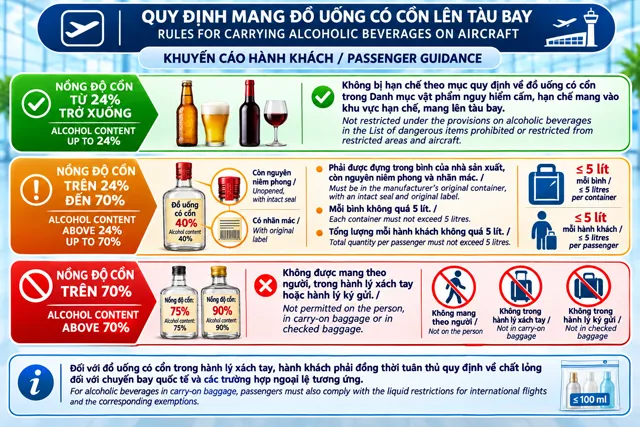
• Alcohol content of 24% or lower: Not restricted according to the regulations on alcoholic beverages in the list. • Alcohol content above 24% to 70%: Must be contained in the manufacturer's bottle, sealed and labeled; each bottle must not exceed 5 liters, with a total amount per passenger not exceeding 5 liters. • Alcohol content above 70%: Not allowed to be carried on person, in hand luggage or checked baggage. For alcoholic beverages in hand luggage, passengers must also comply with the liquid regulations for international flights and the corresponding exceptions.
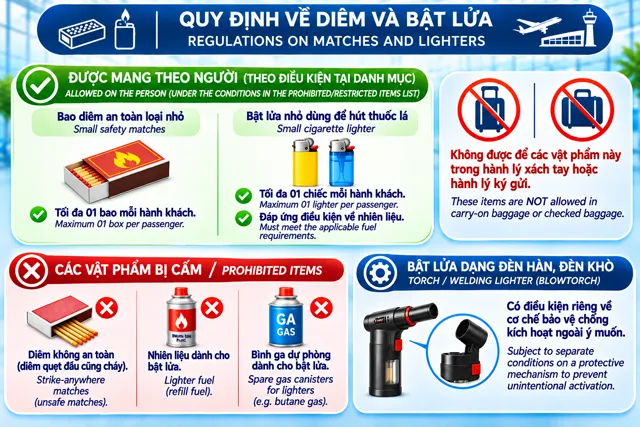
Small safety matches and small lighters for smoking can be carried by passengers under the conditions specified in the List. • Small safety matches: a maximum of 01 pack per passenger. • Small lighters for smoking: a maximum of 01 piece per passenger and must meet fuel conditions. These items must not be placed in carry-on luggage or checked baggage. Unsafe matches, fuel, and spare gas cylinders for lighters are prohibited from transport. Welding lighters and torch lighters have specific conditions regarding protection mechanisms against accidental activation.
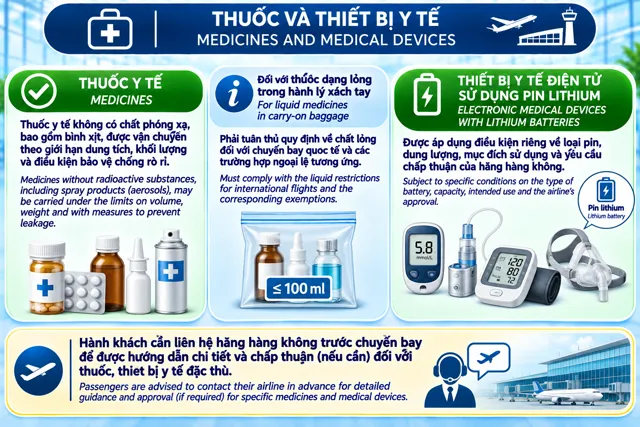
Non-radioactive medicinal products, including aerosols, are carried subject to limits on volume and weight and requirements for protection against leakage. Liquid medicines in carry-on baggage must comply with international liquid regulations and the applicable exemption conditions. Electronic medical devices powered by lithium batteries are subject to specific conditions regarding battery type, capacity, intended use and airline approval requirements.
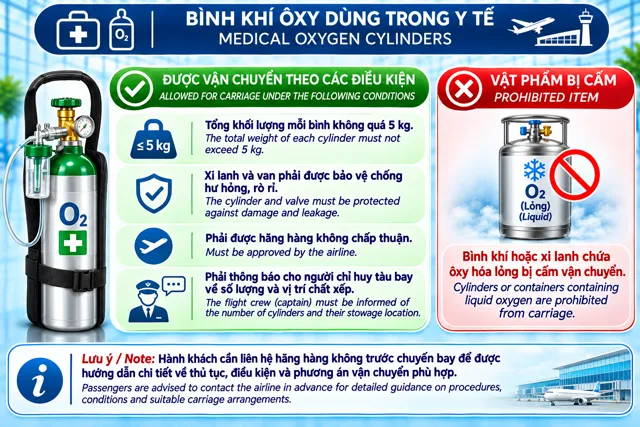
• The total weight of each cylinder must not exceed 5 kg. • The cylinder and valve must be protected against damage and leakage. • Approval from the airline is required. • The pilot in command must be informed of the quantity and loading location. Gas cylinders or cylinders containing liquid oxygen are prohibited from carriage.
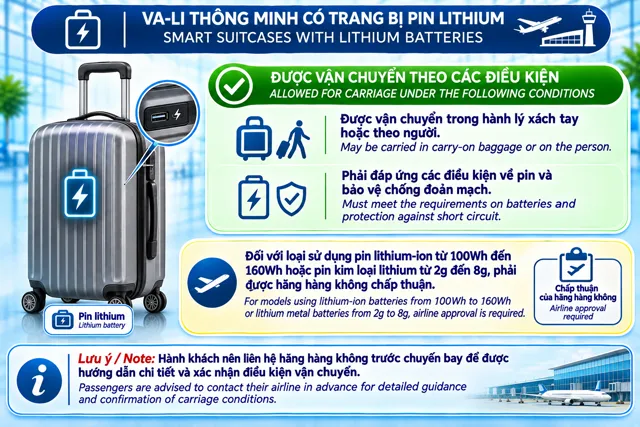
Suitcases may be carried as hand baggage or on the passenger, subject to battery and short-circuit protection requirements. For items using lithium-ion batteries with a capacity of 100Wh to 160Wh or lithium-metal batteries containing 2g to 8g of lithium, airline approval is required.
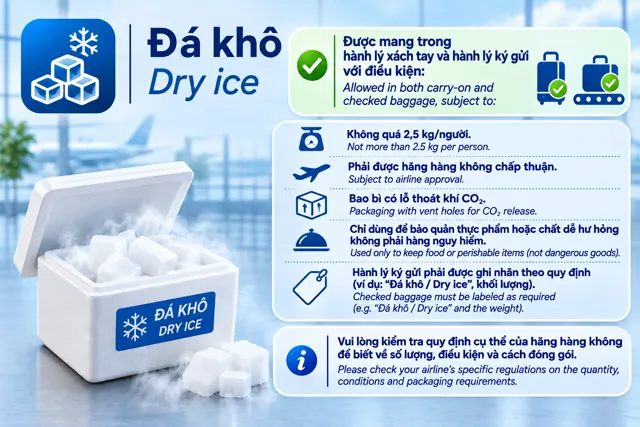
Permitted for transport under the following conditions: • No more than 2.5 kg per passenger. • Only for preserving food or perishable items that are not dangerous goods. • Packaging must have vents for CO₂. • Must be approved by the airline.
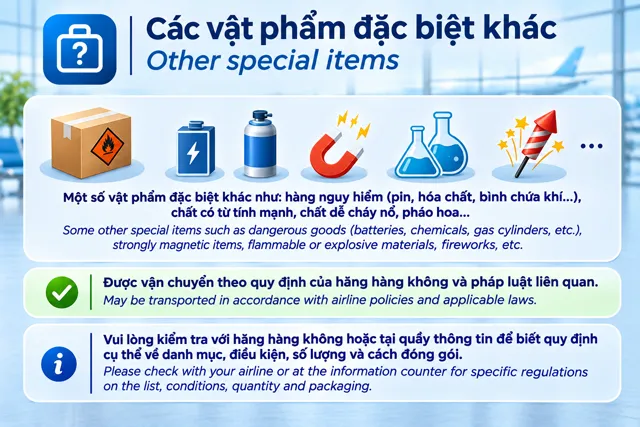
Items such as hydrocarbon gas-powered hair curlers, avalanche rescue backpacks, self-inflating personal safety devices, fuel cells and other specialized equipment are subject to specific conditions under the List of Dangerous Goods Prohibited or Restricted in Restricted Areas and on Board Aircraft. Passengers are advised to contact their airline before departure for guidance.
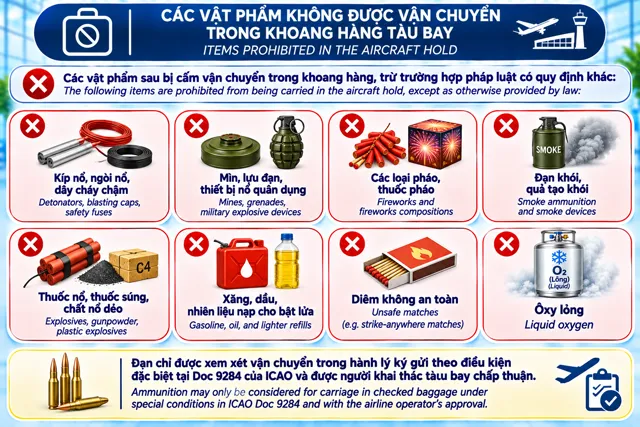
The following items are prohibited from being transported in the cargo hold, unless otherwise provided by law: • Detonators, fuses, slow-burning cords. • Mines, grenades, military explosive devices. • Fireworks, explosive powders. • Smoke bombs, smoke generators. • Explosives, gunpowder, plastic explosives. • Gasoline, oil, fuel for lighters. • Unsafe matches. • Liquid oxygen. Ammunition may only be considered for transport in checked baggage under special conditions as per Doc 9284 of ICAO and must be approved by the aircraft operator.
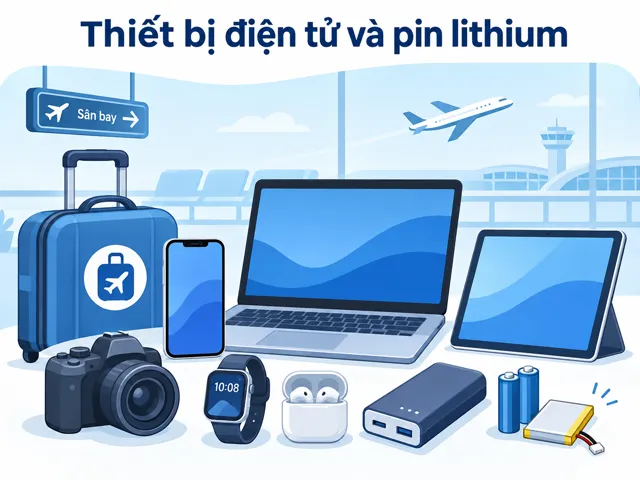
Personal electronic devices using lithium-ion batteries under 100Wh or lithium metal batteries containing less than 2g of lithium may be checked in if they meet the following conditions: • Must be completely powered off, not left in sleep or hibernation mode. • Must be protected against accidental activation. For devices with lithium-ion batteries from 100 Wh to 160 Wh or lithium metal batteries from 2g to 8g, airline approval is required. Spare lithium batteries are not allowed to be transported in checked baggage.

• Alcohol content of 24% or lower: No restrictions according to regulations on alcoholic beverages. • Alcohol content above 24% to 70%: Must be contained in the manufacturer's bottle, sealed and labeled; each bottle not exceeding 5 liters and each passenger not exceeding 5 liters. • Alcohol content above 70%: Not allowed for transport.

Items such as perfume, hair spray, and personal hygiene products are allowed in checked baggage under the following conditions: • Each container must not exceed 0.5 kg or 0.5 liters. • The spray valve must be protected against leakage. • The total weight or volume of items listed in categories 3, 8, and 11 of Section III must not exceed 2 kg or 2 liters per passenger. Non-toxic, non-flammable spray items for sports or household use in category 11 may only be transported in checked baggage under the specified conditions.
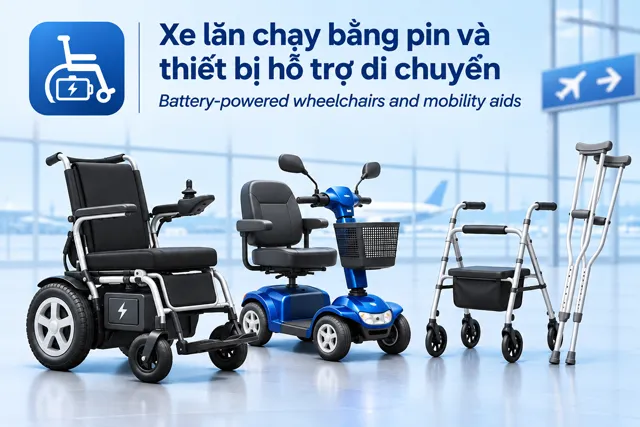
Battery-powered wheelchairs and similar mobility aids may be transported in the cargo hold if they meet the requirements applicable to each battery type. • They must be approved by the airline. • Measures must be taken to protect the batteries and prevent short circuits. • The removal, packaging and transport of spare batteries must comply with the requirements applicable to each battery type. For wheelchairs powered by removable lithium-ion batteries, regulations specify that the removable battery must not exceed 300Wh, with a maximum of one spare battery not exceeding 300Wh or two spare batteries, each not exceeding 160Wh.
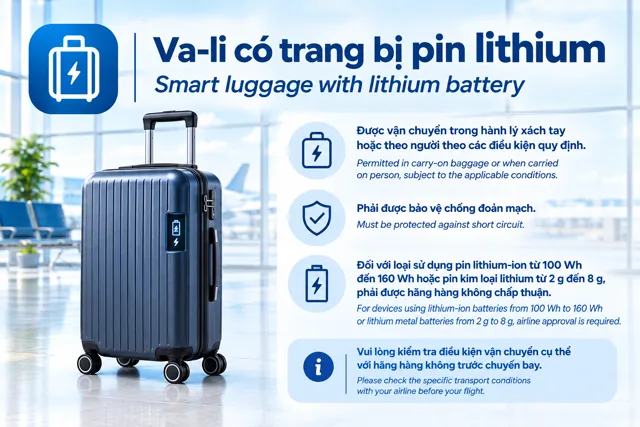
Baggage fitted with lithium batteries may be checked in only if the battery removal and protection requirements specified in the list are met. In some cases, airline approval is required.
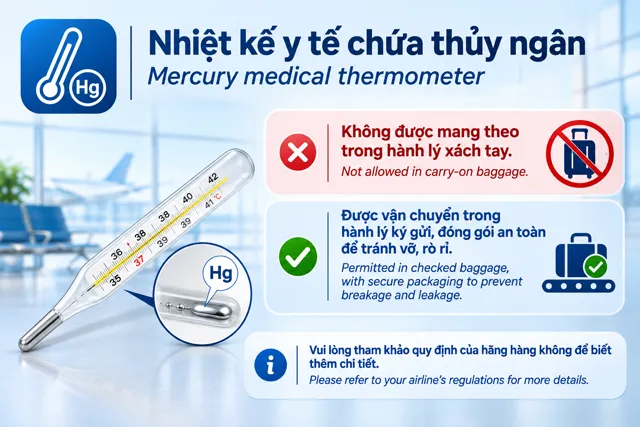
Each passenger may carry 01 mercury medical thermometer in checked baggage, for personal use only, provided it is placed in a protective case or cover.
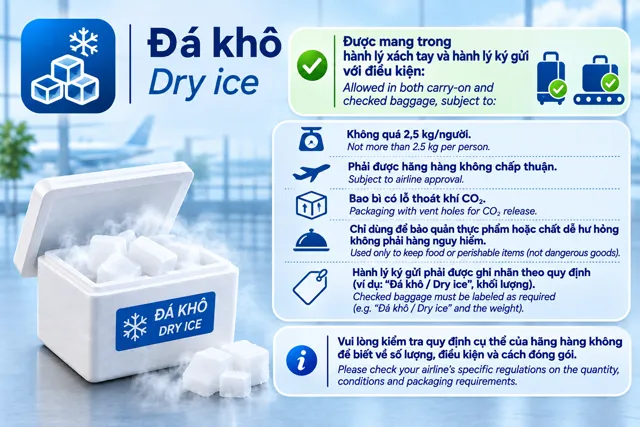
Dry ice may be carried as checked baggage provided the following conditions are met: • No more than 2.5 kg per passenger. • It is used to preserve food or perishable items that are not dangerous goods. • The packaging must have vents for CO₂. • Approval from the airline is required. • The packaging must be labeled “DRY ICE” or “CARBON DIOXIDE, SOLID” and show the net weight as required.
Please contact your airline before your flight for guidance.